Classic feminist theory holds that no man can be oppressed because of being a man (hooks, 1981, 2015; Collins, 1990). In other words, only women can be oppressed because of their gender. But the truth is, for people classified as black – this is not correct at all (Curry, 2017, 2018). For ‘black’ people, it wasn’t true at the time of our enslavement, and it is still not true for ‘black’ people today living through the legacy of slavery, colonialism, Jim Crow and the Colour-bar systems. This misinformation is taught to ‘black’ girls and boys in their informative years at school. Black people are not taught that ‘black’ men and boys are not part of the system of Western patriarchy. In truth, they never were, and never will be (Curry, 2017, 2018). Yet, in feminist ideology, ‘black’ men and boys are included with ‘white’ men as patriarchs. This is incorrect education for ‘black’ girls and ‘black’ women in particular (see article: Genealogy of the Racially Illiterate) To illustrate that ‘black’ men and boys are also oppressed, because of their sex and gender, we must begin by taking an excursion back into the dark and terrible violence of African enslavement.
A few days before entering the slave ships, all enslaved Africans, male and female, had their heads shaved. They stripped search them, and their body parts carefully inspected (Pert-em-Hru, 2016). Next, viewed as cargo, they had to be branded according to those who apparently own them. The enslaved men, women and children who had been confined to the slave castles, or slaves’ pens, were given a meal. After being fed, they were taken to the slave vessels chained in pairs by their ankles. Both male and female were stripped naked where they boarded the ship (Reynolds 1985). The men and women were then put into different compartments. However, the women, boys and girls, were allowed to remain on deck. Their only protection was a sale in good weather and tarpaulin in bad weather. Perceived as less of a threat, often the women and children were allowed to move about once the ship set sail. The men remain fastened by leg-irons (Reynolds 1985). The deadly, ‘Middle Passage’ was the journey across the Atlantic Ocean to the Americas under insanitary conditions, brutal violence and dehumanisation. Once the ships arrived in the Americas, the Africans were cleaned up, body part inspected again and purchased from ship captains.
The next stage in this evil process, led to centuries of plantation slavery or ‘chattel enslavement’, which included many forms of terrible dehumanisation which was directly linked to their sex and bodies (Foster, 2011). It included perpetual rape of both ‘black’ women and ‘black’ men (Curry 2017; Woodard, 2014; Pert-em-Hru, 2017). The fact that ‘black’ men were excessively raped by both ‘white’ men and ‘white’ women is an obvious truth, yet it is always played down in European historiography (Curry, 2017). Throughout this whole egregious process both ‘black’ men and ‘women’ were totally dehumanised. Their bodies terribly abused and violated based on their sex and whether male or female (Foster, 2011).
After slavery, colonised Africans were denied human rights through a process of further dehumanisation, which involved seizing their bodies, male and female, further rape of both sexes, and ‘body experimentations’ (Washington, 2007) and representing them as backward, depraved and savage. In the US, this was followed by the system of Jim Crow segregation in America and Colour-bar systems in Europe was introduced. How were ‘blacks’ discriminated against in these systems? Prof. Curry (2018) explains:
Black men were trapped by the sexual order of Jim Crow. Under the South’s patriarchal order, Black men were punished more severely than their Black female counterpart for violating the societal norms used to enforce their racial inferiority. Black males were condemned to the bottom of the racial caste system such that any attempt by a Black man to improve himself economically was “perceived by the white caste as an affront”. Racialized maleness is a different kind of threat to white superiority in repressive racial regimes than femaleness. This kind of maleness exists in a different register distinct from gender, sociologically obvious, but theoretically unaccounted for in our reading of Black maleness.
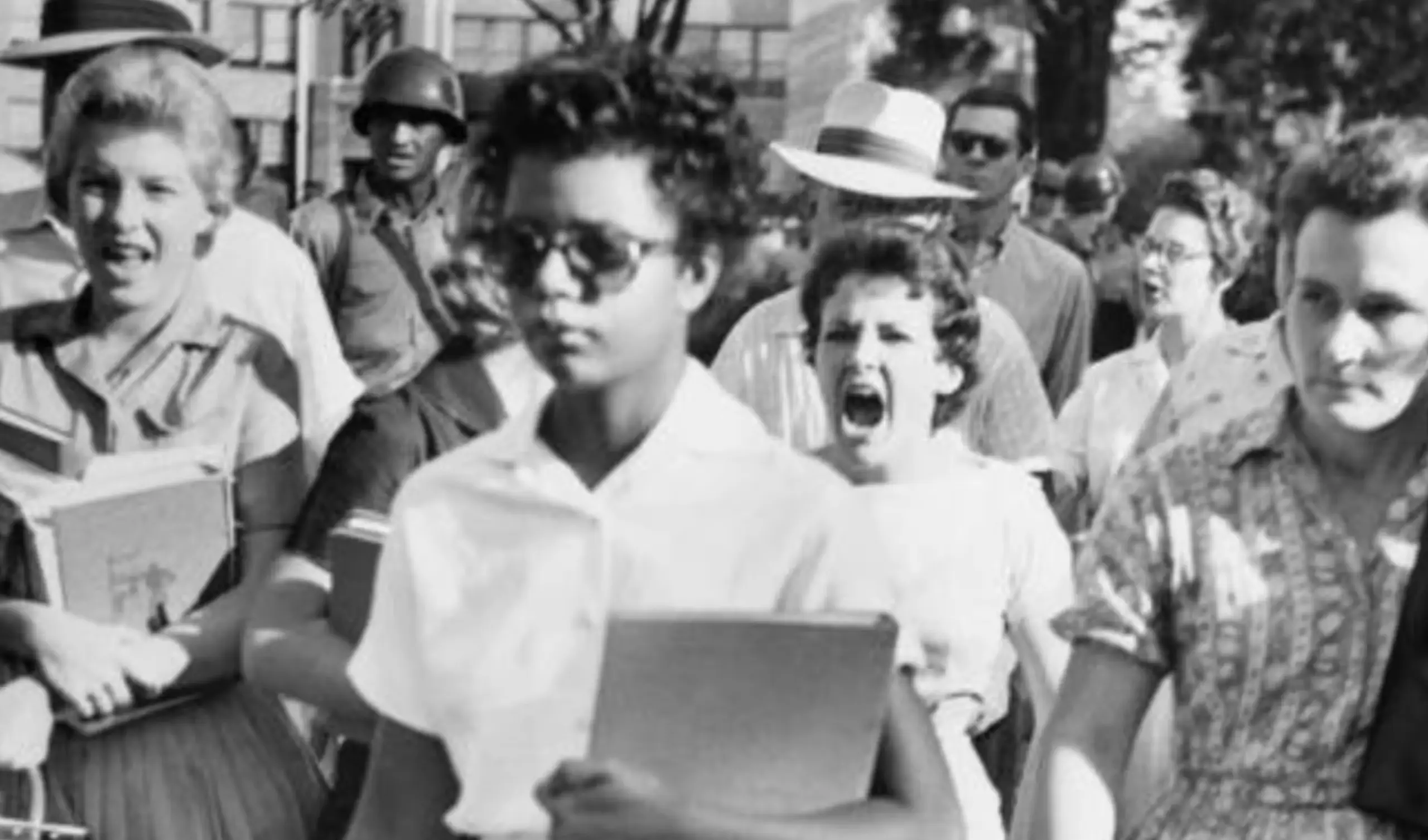
During the Jim Crow era, ‘white’ men used rape and rumours of rape to warrant violence against ‘black’ men as well as to remind then ‘black’ women that their bodies where not their own (Edward,1979). ‘White men and women in positions of power over ‘black’ men and women, such as police officers and employers, used sexual assault and rape to dominate them both (Staples,1978).
The legacy of slavery and its subsequent colonisation has left an indelible scar on the very existence of people classified as black. Both ‘black’ men and ‘black’ women’s racial status is what prof. Mills (1997) calls ‘sub-persons’.
We have become the wretched of the earth. We are the most looked down on in this world. It is we who are at the bottom of racial hierarchy. However, as racism continues to affect the lives of a ‘black’ people, it takes a ‘slightly’ different approach for the ‘black’ girl and women. In truth, the ‘black’ women in a ‘white’ racist society are not perceived as threat, to the degree, that ‘black’ men and boys are (Stewart & Scott, 1978; Mincy, 2003; Alexander, 2010). As a result, social mobility in ‘white’ societies, for the ‘black’ women and ‘black’ girls is ‘a touch’ easier but it is still very much characterised by racism. Yet, from the beginning of our enslavement we can see that racism has always included a degradation of our particular sex and gender. There was no division, both male and female bodies were sexually violated. The racist dehumanisation included an oppression of gender and sex for both ‘black’ male and female sexes.
The question then, must be asked: as a ‘black’ woman, when did your main form of oppression, which historically has been ‘race’ and racism– switch to gender? Did it switch at all? When did it switch to class or sexism? When did ‘race’ and racism become secondary, and feminism take centre stage? If you cannot answer these questions cogently and truthfully, then you’ve been ‘miseducated’ and your ‘consciousness falsified’ (Woodson,1933; Wilson, 1993). You have blindly accepted what Prof. Mazama (2020) calls ‘culturally destructive theories within European post-modernism’ – feminism and intersectionality. Theories that destroy the very fabric of ‘black’ and African cultural practice. The truth is – you should be able to articulate when your main problem of existence as a ‘black’ woman changed from ‘race’ to gender, and from racism to patriarchy?
Did you know, for example, that in the early 1900s ‘white’ women began to participate in male Ku Klux Klan organisations? (Curry, 2021) Soon after, they but sought to create their own leagues to protect and enforce women’s rights. They were not simply spectators of the violence against ‘black’ men and ‘black’ women. ‘White women arranged and participated in terroristic acts designed to stop ‘black political participation and spread anti-immigrant sentiment. The mobilisation of women into the 1920s’ Klan linked their racism to a ‘specific gendered notion of the preservation of family life and women’s rights’ (Curry, 2021).
Aspects of the theoretical and historical development of Feminist theory
The fact is, your racial status and main form of oppression as a ‘black’ woman, has never really changed. Ultimately, the nature of ‘race’ and racism against ‘black’ people has never stopped since our time on the slave ships and plantations. Even after the immediate aftermath of the Civil Rights movement in the US and UK, in both material and ideological terms, we see racialised distributions of wealth and resources (Oliver & Sharpiro, 2002). However, as touched on, these resources are carefully dispensed in such a way that ‘black’ women get to receive proportionally more than ‘black’ men (Kaba, 2005, 2008; Stewart & Scott, 1978; Mincy, 2006; Alexander, 2010). In truth, ‘black’ women in a ‘white’ racist society are not perceived as a threat, to the degree, that ‘black’ men and boys are (Curry, 2021, 2018).
Furthermore, light skinned ‘black’ women receive more than ‘black’ women of darker complexions (Monk, 2014; Seltzer & Smith, 1991). Here, in both cases, the concept of ‘interest convergence'(Bell,1992; Delgado & Stefancic, 2012), is also at play, which has allowed ‘black’ women to make personal and social advancements as ‘black’ woman in ‘white’ societies. Interest convergence is one of the tenets of Critical race theory, from the racial realist tradition, that suggests that real social and political change for ‘black’ people only occurs when their interests align with the ‘white’ dominant group.
Social mobility for you as ‘black’ women is ‘marginally’ easier than if you were a ‘black’ man, but you are still racially oppressed (Kaba, 2005, 2008). However, the problem is that these advances are often seen by ‘black’ women as Civil Rights advances and the work of the European waves of Feminism in the twentieth century. But this is a distortion of the the whole story. There is much more too it politically. Something is very wrong here –you’ve been tricked. You’ve been bamboozled. More directly, you’ve been used. But specifically, by whom? You’ve guessed it – by the racist ‘white’ women.
Firstly, you have overlooked that the modern concept of ‘race’ was central to the making of the modern world (Mills, 1997; 2015) and has constructed ‘systems of racism’ (Mills, 1997). You have not ‘fully’ understood that ‘western ‘patriarchy is part of these ‘systems of racism’, white domination (Ani,1985, Welsing, 1991). It was European epistemology, not Black Studies, that told you that feminism largely arose in response to Western traditions that restricted the rights of women. But what women? In reality, the ‘rights of women’ never meant ‘black’ women.
Prof. Curry (2018) points out that, historically, the freeing of ‘black’ people from slavery reorganised the racial thinking of the nineteenth century ‘black’ people. This reorganisation included feminist and gender ideologies put in place by elite ‘white’ women to secure their position as the so-called ‘mother of humanity’ (Curry, 2018). Specifically, ‘black’ men became the largest threat to the order of ‘white’ civilisation almost overnight (Curry, 2017). We are told that the end of slavery was an extension of democracy toward freedom. But history tells a very different story. The emancipation of the so-called negro was a big problem when he was able to access the ballot. Suffragettes condemned ‘black’ men arguing that ‘black’ manhood would destroy ‘white’ civilisation and even womanhood itself (Curry, 2018).
As we got into the twentieth century, the ‘black’ women become the precursor to the various hybrids of ‘white’ feminism namely ‘black’ feminism, ‘womenism’ and African feminism (Steady, 1981). The term ‘black feminism’ should have felt strange, alien and odd to ‘black’ women. Putting the word ‘black’ in front a concept that is European, always signals, that there is a problem of originality, neglect or cultural practice. Yet, due to years of racial and social oppression, doctrination and miseducation, ‘black’ women could not see the fault line. Many today, are still tricked confused and deceived by this Euro-centric and (often) racist ‘white’ conflict theory – which has nothing to do with the ‘black’ and African women (see Ama Mazama, The Afrocentric Paradigm, 2003).
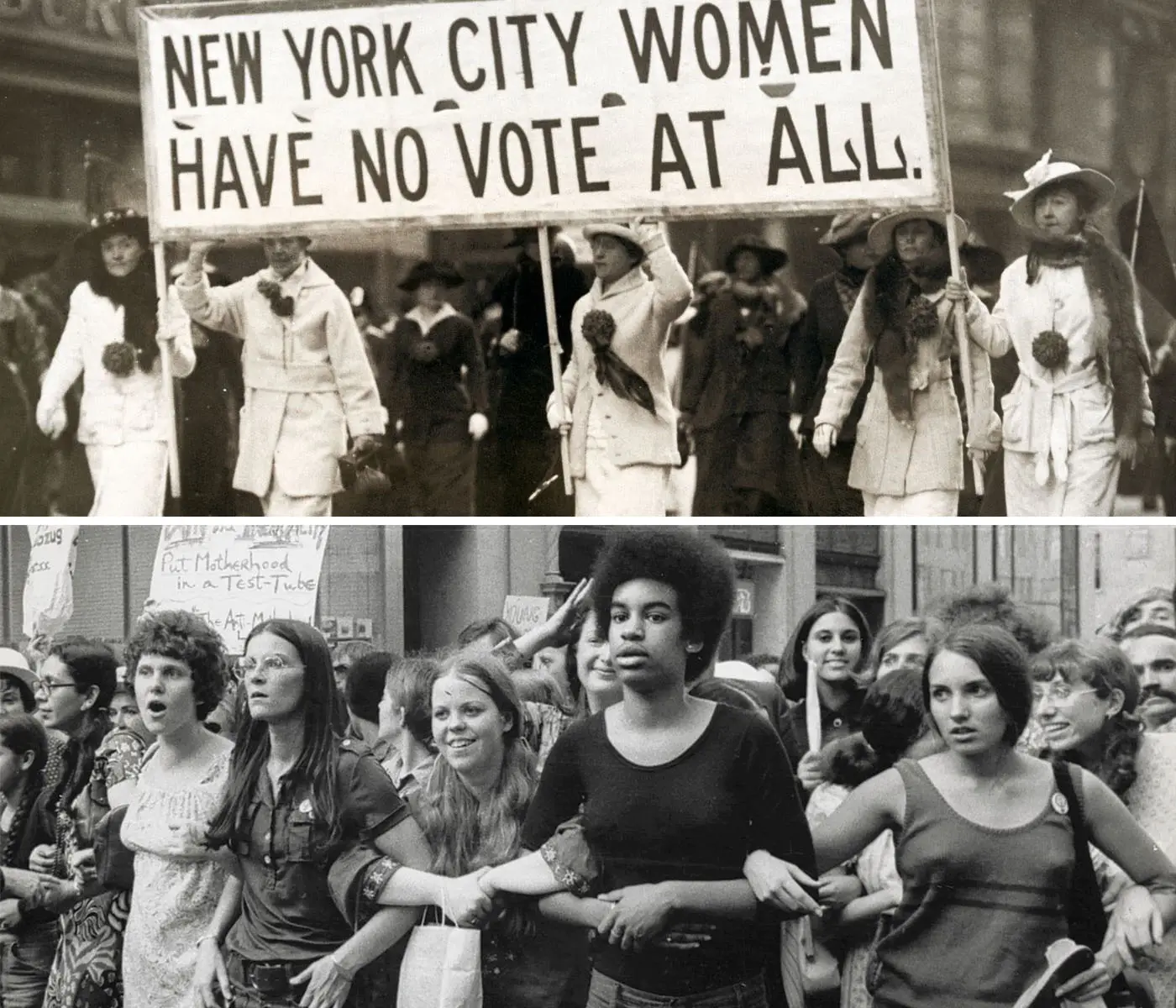
To begin to understand how this problem was constructed we must first look at part of the Western tradition; the ‘vote’. Yet, according to how socio-political development were shaping, because of the constant resistance that ‘black’ people were putting toward, it was clear that ‘white’ women were not going to get ‘the vote’ before ‘black’ men (Curry, 2021). This is the centre of the problem. It is called: enfranchisement. Put directly, Curry (2021) explains that feminism began in the 1880s as backlash to ‘black’ male emancipation and enfranchisement, the right to vote. (Curry, 2021; Curry,). Backlash means that there is a strong negative reaction by a large number of people, specifically to a social or political development. In this case it was white middle to upper-class women in society.
In his article, ‘Feminism as Racist Backlash: How Racism Drove the Development of 19th and 20th Century Feminist Theory’, Prof. (2021). Curry deals specifically with the theories created and sanctioned by white feminists from 1860-1980. These theories came as the consequence of feminism’s racist theories based on research from ethnologists and evolutionary theorists in the nineteenth century. Also, from criminologists in the twentieth century. Curry states that:
‘In using the term racial backlash to describe feminism, I mean to convey a deliberate and dedicated program of action by a dominant group, in this case white women, who along with various white supremacist entities sought to eradicate the perceived gains of suffrage and citizenship for Blacks through the criminalization of Black men’.
Put simply, ‘white’ women could not believe that ‘black’ men were going to be able to vote before they did. So, who do you think they used (and miseducate) to help them to achieve their political goals. Who were naïve (or miseducated) to imagine that ‘white’ women’s racist ways, at that time, had somehow gone away. Who did not fully understand that you cannot purge white supremacy, whiteness, racism, structural, systemic and individual, from ‘white feminism’, unless you end the ‘systems of racism’ (Mills, 1997) first. Yes, you’ve guessed right – unfortunately the ‘black’ women.
In reality though, it was not her naiveté, more so her ‘oppressed state of mind’ that caused the ‘black’ women to side with the ‘white’ women’s ideology and put ‘gender’ issues above ‘race’, and the goal of total liberation from racial oppression of ‘the whole black group’. Due to her racial oppression, she began to think, in certain ways like that of ‘white’ feminist women. The ‘black’ women had no real connection to her own ‘black’ and African cultural practice (Ani, 1985). She began to see ‘black’ men though the ‘white-eyes’ of feminism. She had imbibed the ‘white’ racist feminist agenda at that time. Unfortunately, notice Sojourner Truth’s internally racialised attitude, as she disconnects herself from the ‘black’ male:
‘There is a great stir about colored men getting their rights, but not a word about the colored women; and if colored men get their rights, and not colored women theirs, you see the colored men will be masters over the women, and it will be just as bad as it was before. So I am for keeping the thing going while things are stirring; because if we wait till it is still, it will take a great while to get it going again. White women are a great deal smarter, and know more than colored women, while colored women do not know scarcely anything. They go out washing, which is about as high as a colored woman gets, and their men go about idle’ (Truth 1867).
Truth believed that ‘black’ men were more vicious and brutal that ‘white’ men who instituted the enslavement of ‘black’ and African people. Also, that ‘white women were more intelligent than ‘black’ women who they ruled and controlled (Curry, 2017). Because of her miseducation, she had the same views as her ‘white’ female superiors. ‘White’ racist feminist, Elizabeth Cady Stanton, stated:
‘It would be better for a Black woman to be the slave of an educated [w]hite man, than of a degraded ignorant [b]lack one’ (Curry,2017)
As the miseducation continued, toward the mid-20th century, ‘black’ women became the precursor to various hybrids of white feminism. These as mentioned, were: ‘black’ feminism and ‘womanism’ (Steady, 1981), and on the African continent, ‘black’ feminism became ‘African feminism’.
White Feminism includes Black Feminism, Womanism and African Feminism
Black feminism, womanism and African feminism is essentially White feminism in ‘black’ skin, so to speak. Do not be confused by what is called: ‘African feminism’. This is essentially, white/black feminism practice by racially illiterate continental African women. Fundamentally, the word feminism is a European construction. It is colonial word. It is not an African word. It does not derive from an African cosmology. On the African continent, Western feminism is always viewed as deeply questionable. It is also viewed as totally incompatible with African cultural values and sacred systems (Atanga, 2013). Thus, within the cultural African context, its usage is limited, and in fact it creates conceptual and cultural problems of African personhood. It should not be used at all in explaining ‘black’ African womanhood.
In the diaspora, as the ‘black’ female begins to develop, because of the onslaught of racism levelled against her, as well as racist ‘white’ women’s attitude, she will often reject and move away from ‘white’ feminism to what she thinks is more progressive, which is black feminism (Collins, 1990) and or womanism (Walker, 1983). On the African continent, ‘African feminism’ (Blackmon, 2008). The ideology of ‘womanism’ was created by the ‘black’ feminist Alice Walker. Unfortunately, both black feminism, womenism, and African feminism are all ‘derivative orientations’ of white feminism and are clear misrepresentations of the real ‘black’ female self (Mazama,2003, 2020; Nikol, 2006). Many ‘black’ girls and women do notice the clear racism of many ‘white’ women feminists. However, they often fail to fully understand very important aspects of the history of feminism. They have not properly understood their own history, for if they had, they would not have fallen for Black feminism or and womanism. Unfortunately, most ‘black’ women in the middle stages of racial illiteracy, do not move beyond black feminism or womanism.
- What the ‘black’ women and ‘black’ girl need to develop towards is: ‘African Womenism’ (Hudson-Weems, 2019; Mazama, 2003, 2020).
As ‘black’ and African people, note carefully, that this is the only system that is completely non-Eurocentric and puts African cultural practice at its centre. It is precolonial and does not use post-modern European modes of thinking, whether in Africa or the diaspora. For a detailed discussion on African Womanism, see:
- Africana Womanism: Reclaiming Ourselves, by Clenora Hudson-Weems.
African Womenism is not Black feminism, womanism or African feminism. Today, often the real ‘black’ African female identity is subsumed and intertwined with ‘white’ feminist orientations and its various derivatives. Ultimately, today, many ‘black’ women are entwined, and subsumed by ‘white’ intellectualism about gender and ‘intersectional feminism’. They believe that these theories are synonymous with reality, and with ‘black’ consciousness. They are not. ‘White’ and ‘black’ feminists tend to define feminism as a movement to end sexism, sexist exploitation, and gender oppression’ (hooks, 1981,2015; Collins,1990). However, the reality is that sexism and gender oppression will never end until ‘systems of global racism’ (Mills, 1997) are completely eradicated from the world.
Feminism’s supposedly promising Innovation: Intersectionality
The concept of intersectionality was first introduced by the ‘black’ American feminist, Kimberle Crenshaw’s (1989) in her article entitled: ‘Demarginalizing the Intersection of Race and Sex: A Black Feminist Critique of Anti-Discrimination Doctrine, Feminist Theory, and Anti-Racist Politics.” In that essay, Crenshaw (1989) deals specifically with ‘black’ women’s experience of discrimination. She argues that:
Black women sometimes experience discrimination in ways similar to white women’s experiences; sometimes they share very similar experiences with Black men. Yet often they experience double-discrimination – the combined effects of practices which discriminate on the basis of race, and on the basis of sex. And sometimes, they experience discrimination as Black women – not the sum of race and sex discrimination, but as Black women’.
This muddled statement, signal’s major faultlines with intersectionality. What discrimination is Crenshaw referring to? Mostly all discrimination ‘black’ women receive is racialised (Mazama, 2020, 2009; Steady, 1981; Welsing, 1992; Ani, 1985; RH,Vol,I 2023). Firstly, ‘black’ women do not ‘sometimes’ share the same racial discrimination with ‘black’ men – they almost always do. Any similarities ‘black’ women’s discrimination has to ‘white’ women’s discrimination, is used by ‘white’ and ‘black’ feminist women to ‘falsify the consciousness’ (Wilson, 1993) of ‘black’ women to become ‘white/black feminist’ in ‘black skin’ (‘black’ feminist/African feminists/ womenists). Secondly, as mentioned, ‘black’ women are not alone in experiencing what Crenshaw calls ‘double discrimination’. This idea is pure fiction. It is illusory. There is no ‘double discrimination’ for ‘black women’, that there isn’t for ‘black’ men and boys (Curry, 2017,2018, 2019). ‘Black’ women cannot experience discrimination outside the European modern concept of ‘race, which includes sex discrimination. Remember, ‘race’ is (mostly always) sexualised – ‘race’ functions within the sexual dynamics of the ‘black’ and African body (Curry, 2017; Thomas, 2007). (See also: What is Race? in RH, Vol, 2023).
- Thus, the questions we should ask are: how do ‘black’ women experience discrimination, as ‘black’ women, that is not the sum of (or result of) race and sex discrimination? What is this experience?
Here, Crenshaw, maybe thinking about European class relations and class stratification. (see: The Genealogy of the Racially Illiterate). In this article, I explain that, in actuality, for people classified as black, there is no ‘class conflict’, in Africa or in the diaspora, as it relates to ‘black’ racialised and socio-political existence in ‘white’ or Westernised societies. What we had in Africa (and still have) is a ‘colonial conflict’. There is no ‘class struggle’ only an ‘anti-colonial struggle’ for ‘black’ people. There are no ‘classes’ only ‘colonial subjects’. Our relationship to the state, whether existing within neo-colonialism on the African continent or ‘post’-colonialism in the diaspora, is essentially the same. We are both ‘colonialist subjects’ by which class, in reality, is proxy for ‘race’ (Johnson, 2023).
The core ideas within Crenshaws’ intersectionality have important errors that are overlooked. Such as the idea that ‘black’ males are claimed to benefit from their masculine privilege (Curry, 2019). Prof. Curry (2019) explains:
‘Intersectionality, or rather that idea of intersectionality which suggests that Black women, and only Black women have a unique causal relationship to oppression, rests on a disclosure of revelatory knowledge to the world by the Black female oracle, not research which can be socially challenged and debated socially’.
He continues:
‘Intersectionality declares apriori that it is only Black women who have this special relationship and can verify or reveal these realities. In more practical terms, intersectionality as a political tool argues that despite the empirical realities and various asymmetries of social life where Black women can and do have some advantages over Black men, these material demographic advantages are of no consequence when one considers the “special oppression,” experienced by Black women. Since we cannot verify the truth of such claims, we are now bound by disciplinary morality to trust, and not question, the causal relationship that only Black women have to the world’ (Curry, 2019).
Here, Prof, Curry is explaining that, no empirical evidence is given for the claims that ‘black’ women have a unique relationship to oppression. He shows that, this idea is expressed as if it’s some kind of female universal truth, or intuitive truth. Because of this ‘ultimate oppression’; all other bodies ultimately have an advantage or privilege in relation to them (Curry, 2019). He explains that to the contrary, there is much evidence to show that ‘black’ women do have advantage over ‘black’ men (McDaniel, 2011; Kaba, 2005,2008, 2011). Yet, this is ignored so that the claims are not properly challenged.
Athena Mutua (2019), a ‘black feminist legal scholar argues that:
‘When intersectionality was applied to black men, it was initially interpreted to suggest that “black men were privileged by gender and subordinated by race;” that is, black men sat at the intersection of the subordinating and oppressive system of race (black) and the privileged system of gender (men). Intuitively this notion seemed correct. It also seemed to support the dominant social and academic practice of examining the oppressive conditions that black men faced from a racial perspective. Yet, the interpretation of black men as privileged by gender and oppressed by race appeared incorrect in our observations of racial profiling…while this interpretation of intersectionality seemed to capture some of the differentials between women and men in the black community, as in wage differentials for example, it did not capture the harsher treatment black men seemed to face, not only in the context of anonymous public space that often characterized racial profiling, but also in terms of higher rates of hyper incarceration, death by homicide and certain diseases, suicide rates, and high unemployment as compared to black women’.
Here, Mutua’s research reveals the basic erroneous assumptions that Crenshaw’s theory advocates. Evidence suggests that Crenshaw’s intersectionality is part of the broader feminist agenda, that (historically) seeks to inhibit ‘black’ males civil and human rights, and who are disproportionally marginalised and discriminated against by ‘white’ societies.
Ultimately, there are nefarious reasons for the development of white feminism and its inclusion of ‘black’ women. From the perspective that feminists were only fighting against gender oppression and patriarchy, it makes it seem that the political aims of white feminism were not malicious, merely non-inclusive and incomplete. This is simply not the whole political picture at all. For example, women’s right to the ballot, was not really about equality, but rather the ability of the white race to exercise unchecked power and authority over the ‘black’ people specifically ‘black’ males. Kearney (1903) explained that ‘the enfranchisement of women would insure immediate and durable white supremacy’.
Conclusion
Because white feminism’s commitment to the preservation and imperial project of white supremacy (Curry, 2021; Kearney, 1903), this meant that the movement’s ‘primary’ racial target, of feminist thought and activism, over the recent centuries, was the ‘black’ male. The movement used their theories (Curry, 2021) to derail ‘black American’s struggle for civil rights and human rights. This racist approach which would limit ‘black’ male economic advancement and social mobility, which would affect the entire ‘black’ group’s socio-economic advancement.
Accordingly, throughout history, ‘black’ women have found themselves struggling against racism and sexism simultaneously, but so have ‘black ‘men and boys (Curry, 2017, 2018). Of course, ‘black’ women, have actively debated questions of gender and racial oppression. However, some (or a good number), due to European education, have chosen to rank and prioritise gender oppression over racial oppression. This is a fundamental misunderstanding of what and how European imperialism, and ‘white supremacy and its systems of racism’ (Mills, 1997) function. Furthermore, it is Eurocentric for ‘black’ and African women to reject their own ‘black’ African world view and cosmology, and accept white feminism and its derivatives (‘black’ feminism, African feminism and womenism), over Africana Womanism (Wilson, 1993).
White Feminism presents itself as a fighting force against anti-Black racism, whereby the movement openly shares its failure of ‘white’ feminists to integrate ‘black’ women into their movement (Curry, 2021). This approach presumes that European feminism is universal. It is not (Zakaria, 2021). Also, that it is, and was, a progressive and non-racist movement. Yet, this is not true at all (see: Zakaria, 2021; Hamad, 2021). Furthermore, that it merely suffered from blind spots in its approach to all women’s rights due to the biases of some ‘white’ women (Curry, 2018). Nothing could be further from the truth. Louise Newman (2007) explains her position that:
‘feminism, assimilation and imperialism were historical siblings, the offspring of a marriage between democratic ideals and social evolutionary beliefs, equal citizenship was possible only for those who conformed to the racialized and gendered precepts of (white) civilization’.
White feminism imposes itself on ‘black’ women and girls and Black History. It tells ‘black’ women how to interpret their womanhood, and some ‘black’ women have fallen for this. As intersectionalists, they teach ‘black’ women, that while ‘black’ men are disadvantaged by their race they are nonetheless structurally advantaged by their gender (Curry, 2019) which is totally incorrect. Essentially, they teach ‘black’ women that: men in general, and ‘black’ men, in particular, are their arch enemies. They seek evidence for this in many of the ‘black’ movements of the nineteenth and twentieth century, claiming that ‘black’ women were marginalised and oppressed by the ‘black’ men who ran those organisations.
These revisionist narratives are part of the overall miseducation of the ‘black’ women, so that she does find her way back to the true African self. (Wilson, 1993; Fanon, 1967). For a full and detailed discussion on ‘black’ women in various ‘black’ movements, see:
- I Am Because We Are: Africana Womenism and a Vehicle of Empowerment and Influence, by Janiece L. Blackmon.
While there were problems within these movements, it was clear that ‘black’ women’s identity was always tied in with the goals and desires of the group as a whole, and not as one set on individualistic ambitions. Hudson-Weems (2019) explains that these dilemmas was diffused, as the:
‘The Africana woman did not see the man as her primary enemy as does the White feminist, who is carrying out an age-old battle with her White male counterpart for subjugating her as his property. Africana men have never had the same institutionalized power to oppress Africana women as White men have had to oppress White women….in the effort to fight against racial injustice Black women cannot afford the luxury, if you will, of being consumed by gender issues’.
According to Frankye Malika Adams, former member of the Black Panther Party:
‘Women ran the BPP pretty much. I don’t know how it got to be a male’s party or thought of as being a male’s party. Because these things, when you really look at it in terms of society, these things are looked on as being women things, you know, feeding children, taking care of the sick, and uh, so. Yeah, we did that. We actually ran the BPP’s programs.‛ (Blackmon, 2008).
It is important we construct our own interpretation of our history. Convincing the world of ‘blacks’ men’s supposed antagonism to women’s rights was part of feminism’s racist program. For over a century, feminism has adopted the sciences of its time. It did not matter whether it was evolutionary ethnology in the nineteenth century, or criminology in the twentieth century. It did this to construct racialised others as ‘deviant and uncivilised populations’ able to be transformed through ‘white’ women’s compassion (Bhattacharyya 2013; Zakaria 2021). The racism of ‘white’ feminist women should not be misunderstood to be mere personal weaknesses. The racism of white feminists and suffragists were created by deliberate action and investment in racist womanhood throughout history ( Curry, 2021). ‘White’ women’s participation in the slave ‘trade’; the owning, selling, and abuse of enslaved ‘black men and women (Jones-Rogers 2019) created a basis upon which womanhood was claimed to be above the savagery of the Negro (Curry, 2021).
As a ‘black’ woman it is important you read, study and analyse the article below very carefully. See:
- ‘Feminism as Racist Backlash: How Racism Drove the Development of 19th and 20th Century Feminist Theory’, by Tommy Curry.
References
Michelle Alexander, The New Jim Crow: Mass Incarceration in the Age of Colorblindness, The New Press, 2010.
Marimba Ani, Yurugu: An African Centred Critique of European Cultural Thought and Behavior, Africa World Press, 1995.
Lilian L. Atanga, African Feminism? In L. L. Atanga, E. E. Sibonile, L. Litosseliti, & J. Sunderland, Gender and Language in Sub-Saharan Africa: Tradition, struggle and change (pp. 301–314). Amsterdam: John Benjamins Publishing Company, 2013.
Derrick Bell, Racial Realism, Connecticut Law Review 24 (Online), 1992.
Gargi Bhattacharyya, Dangerous Brown Men: Exploiting Sex, Violence and Feminism in the War on Terror’, Zed Books., 2013
Janiece L. Blackmon, I Am Because We Are: Africana Womenism and a Vehicle of Empowerment and Influence, Virgina Polytechnic Institute and State University, 2008.
Tommy Curry, Ethnological Theories of Race/Sex in 19th Century Black Thought: Implications for the Race/Gender Debate of the 21st Century.” In Oxford Handbook of Race and Philosophy, edited by Naomi Zack, 565–575. Oxford: Oxford University Press, 2016.
Tommy Curry, The Man-Not, Race, Class, Genre, and The Dilemmas of Black Manhood, Temple University Press, 2017.
Tommy Curry, Killing Boogeymen: Phallicism and the Misandric Mischaracterizations of Black Males in Theory, in Res Philosophica 95 (2):1-38, (Online) April 2018.
Tommy J. Curry, Black Studies, Not Morality: Anti-Black Racism, Neo-Liberal Cooptation, and the Challenges to Black Studies Under Intersectional Axioms, (Online) 2019.
Tommy Curry, Feminism as Racist Backlash: How Racism Drove the Development of 19th and 20th Century Feminist Theory (in The Handbook on Economics of Discrimination and Affirmative Action, ed. Ashwini Deshpande (New York: Springer International Publishers, forthcoming), 2021.
Patricia Hill Collins, Black Feminist thought: Knowledge, Consciousness, and the political of Empowerment. Routledge Press, 1990.
Edwards, A., Rape, Racism and the White Women’s Movement (2nd ed.). Chicago: Sojourner Truth Organization., 1979.
Thomas Foster, The Sexual Abuse of Black Men under American Slavery, Journal the History of Sexuality, (Online), 2011.
bell hooks, Ain’t I a Women: Black Women and Feminism, Routledge Press, 1981.
bell hooks, Feminism is for Everybody: Passionate Politics, South End Press, 2015.
Ruby Hamad, White Tears Brown scars: How White Feminism Betrays Women of Colour, Trapeze, 2021.
Stephanie E. Jones-Rogers, They Were Her Property: white Women as Slave Owners in the American South, New Haven: Yale University Press., 2019.
H.D. Johnson, The Racism Handbook for People Classified as Black: A Guide to How Racism Really Works, Black Canon Press 2023.
Kaba, A. J. The Gradual Shift of Wealth and Power from African American Males to African American Females. Journal of African American Studies, 9 (3), 33-44, 2005.
Kaba, A. J. Race, Gender and Progress: Are Black American Women the New Model Minority. Journal of African American Studies, 12, 309-335, 2008.
Kaba, A. J. Black American Females as Geniuses. Journal of African American Studies, 15, 120- 124, 2005.
Belle Kearney, The South and Women’s Rights, The Women’s Journal, April 4: 106., 1903.
Ellis P. Monk Jr., Skin Tone Stratification among Black Americans, 2001–2003, University of Chicago, 2014.
Ama Mazama, The Afrocentric Paradigm. Trenton: Africa World Press, 2003.
Ama Mazama, The Trouble with Black Feminism and African Feminism, YouTube, Molefi Kete Asante Institute Lectures, Sept 10 2020.
Ronald B. Mincy, Black Males Left Behind. Urban Institute Press, 2006.
McDaniel, A., DiPrete, T. A., Buchmann, C., & Shwed, U. The Black Gender Gap in Educational Attainment: Historical Trends and Racial Comparisons. Demography, 48, 889-914, 2011.
Athena Mutua, Multidimensionality is to Masculinities what Intersectionality is to Feminism, Nevada Law Review, 13, 341-367., 2013.
Charles Mills, The Racial Contract, Cornell University Press, 1997.
Louise Newman, White Women’s Rights: The Racial Origins of Feminism in the United States. Oxford University Press, 1999.
Oliver & Shapiro, Black Wealth/ White Wealth; A New Perspective on Racial Inequality, Routledge, 2002.
Omowale Pert-em-Hru, African People Ended ‘The Slave Trade’. Ukombozii, 2017.
Edward Reynolds, Stand the Storm: A History of the Atlantic Slave Trade, Allision & Busby, 1985.
Filomena Chioma Steady, The Black Women Cross-Culturally. Schenhhan Publishing Co, 1981.
Elizabeth Cady Stanton, quoted in Tommy Curry, The Man-Not, Race, Class, Genre, and The Dilemmas of Black Manhood, Temple University Press, 2017.
Robert Staples, Masculinity and Race: The Dual Dilemma of Black Men. Journal of Social Issues, 34(1), 169-183., 1978.
Stewart, J. B., & Scott, J. W., The Institutional Decimation of Black American Males, The Western Journal of Black Studies, 2(2), 82-92., 1978.
Sojourner Truth, Address to the First Annual Meeting of the American Equal Rights Association. New York City, May 10,1867.
Greg Thomas, The Sexual Demon of Colonial Power: Pan-African Embodiment and Erotic Schemes of Empire. Bloomington: Indiana University Press, 2007.
Clenora Hudson-Weems, Africana Womenism: Reclaiming Ourselves, Routledge, 2019.
Vincent Woodard, The Delectable Negro: Human Consumption and Homoeroticism within US Slave Culture, New York University Press, 2014.
Carter G. Woodson, The Mis-Education of the Negro, The Journal of Pan African Studies/ eBook: 2009.
Harriet A. Washington, Medical Apartheid: The Dark History of Medical Experimentation on Black Americans from Colonial Times to the Present, Doubleday, 2007.
Francis Cress Welsing, Isis Papers: The Keys to The Colors, Chicago: Third World Press, 1991.
Amos Wilson, The Falsification of African Consciousness: Eurocentric History, Psychiatry and The Politics of White Supremacy, African World Info Systems, 1993.
Rafia Zakaria, Against White Feminism: Notes on Disruption, Norton & Company, 2021.
Written by : Howard Dean Johnson

Johnson is a teacher and academic with over 30 years of knowledge and experience in race and racism and Black Studies (Africana Studies)