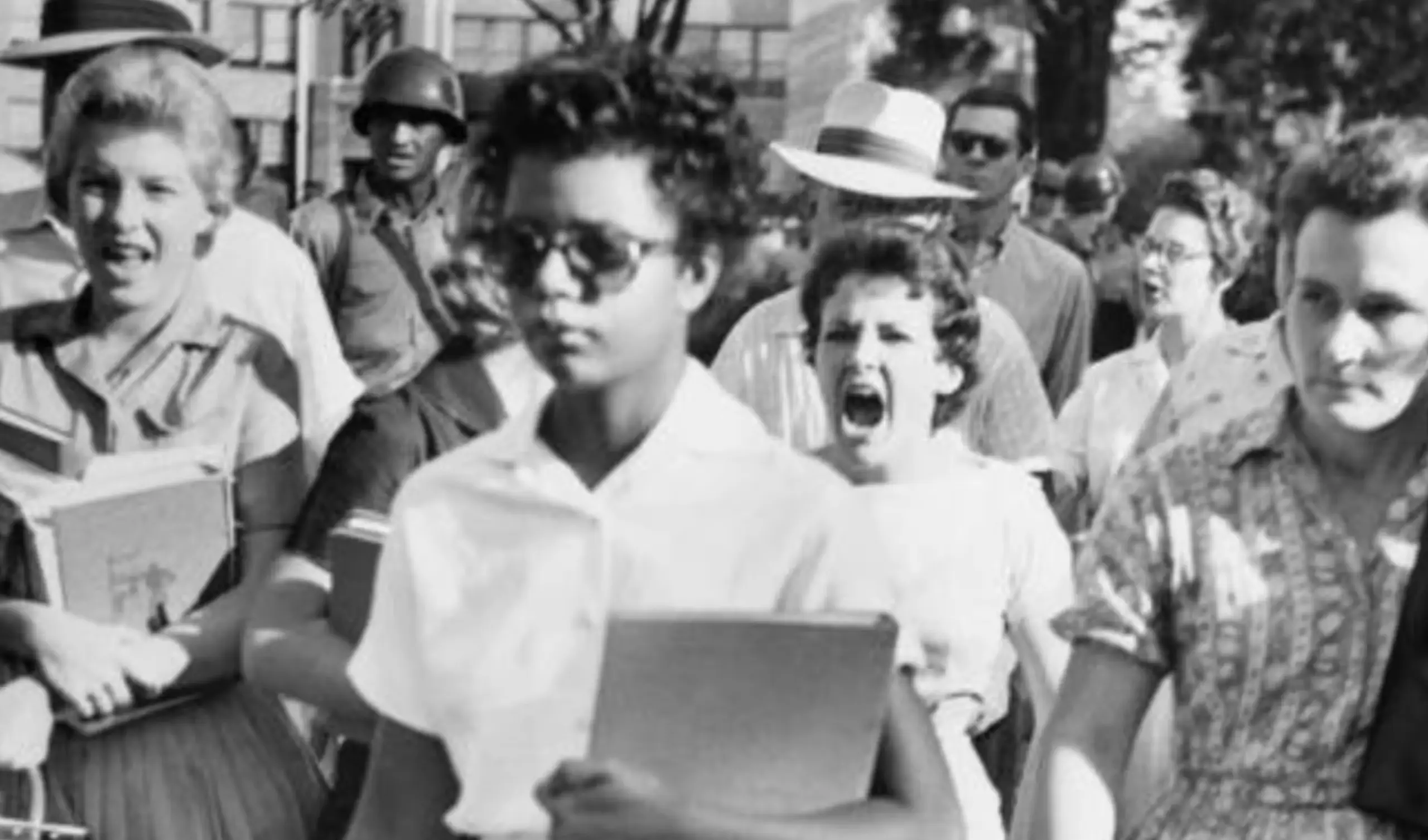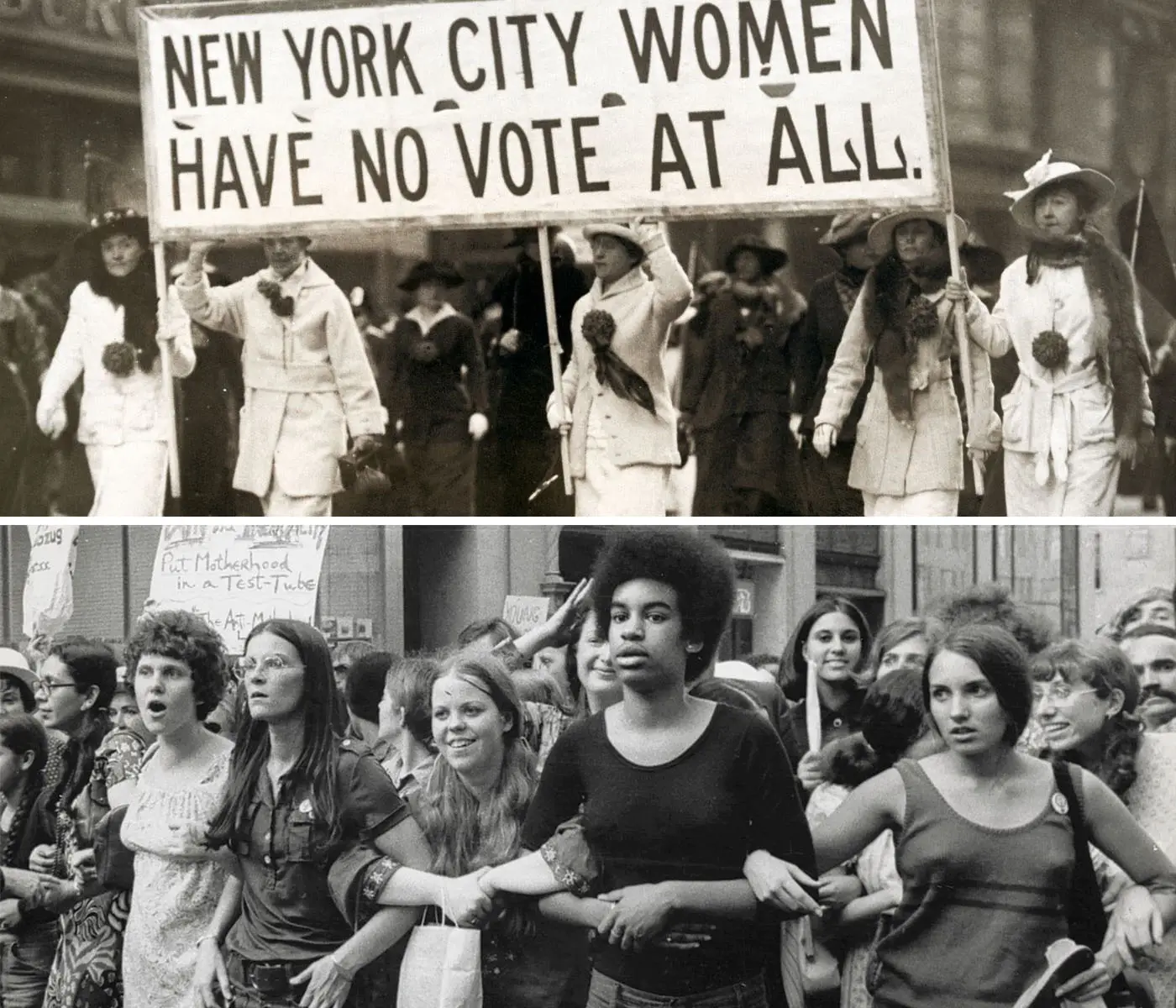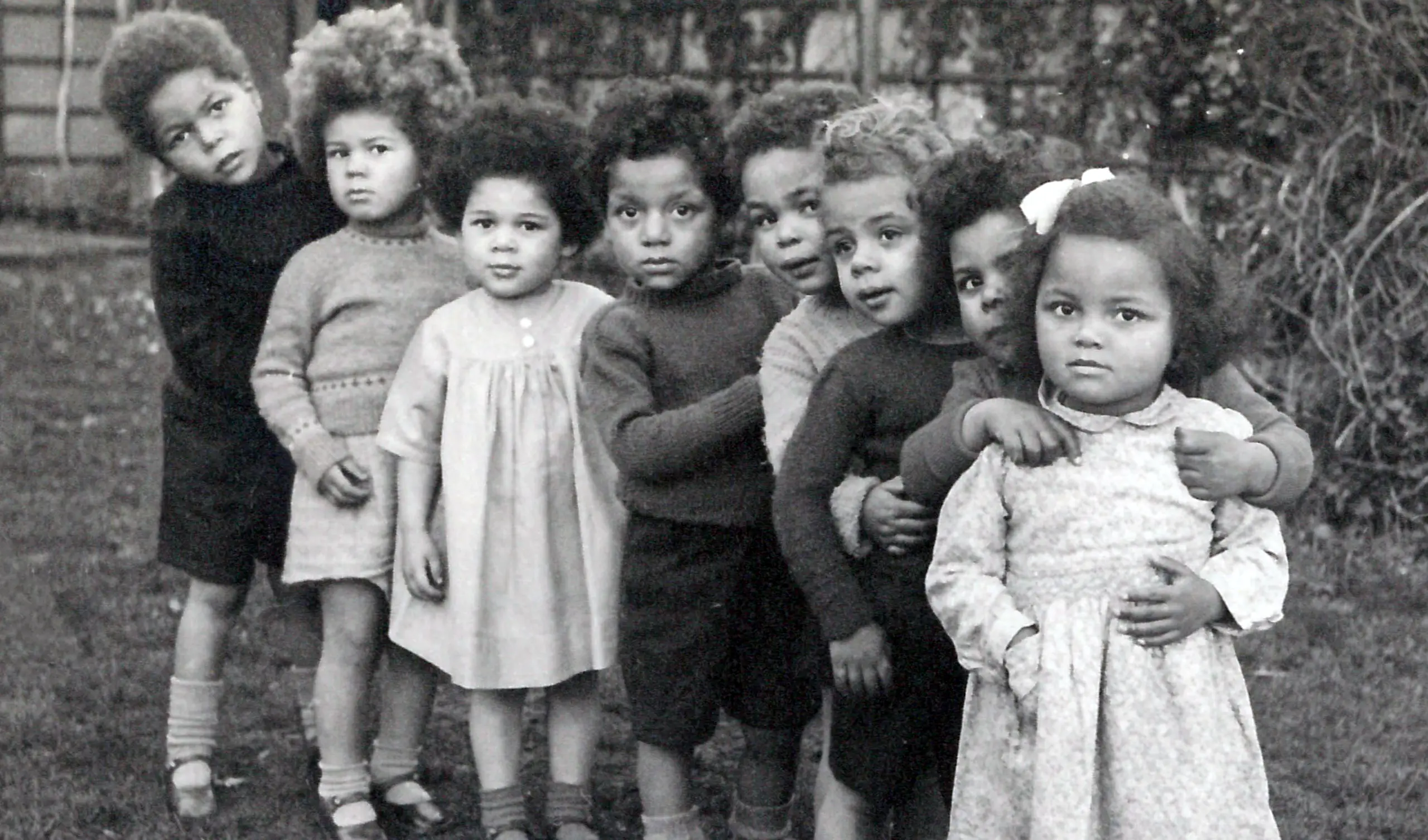
One of the greatest sources of frustration and anger for ‘black’ people in the UK, over the last fifty years, comes from what is called ‘the wall of ignorance‘ (Asante, 2003) that attempts to hide Britain’s long history of racial injustice from the public consciousness. All peoples of the world should be systematically taught the whole truth about ‘race’ and racism and should not be protected against it. There are many race-based truths to be told such as: the persistence of racial inequality in the UK school system (Gillborn, 2008; Vincent 2013). In reality, for ‘black’ people the most dangerous kind of protection is protection against racial truths (Fanon, 1961; Wilson, 1993). Studies have shown that young children, quite early (Clark & Clark, 1939; Clark, 1955; Goodman, 1939) begin to see the ‘normalised’ (Yancy, 2012) socially ‘superior’ position of ‘white’ people in relation to ‘black’ people. Later, most ‘black’ children who become ‘race conscious’ begin to understand that this is due to an advantage in the environment. It is time to tell the truth about racism? Or has it already been told? Are ‘black’ people simply ranting again? How can we honestly call ourselves non-racists or anti-racist advocates and fail to tell-it-like-it-really- is? Yet, in the UK and US, often telling the truth about racism often means that you are in fact a racist, because you keep talking about it.
In 2014, Philip Davies, Member of the Commons Culture, Media and Sport Select Committee, viewed the proposals announced by BBC director general Tony Hall to boost the representation of ‘black’, Asians people on and off-screen, to be racist. He stated, “I think that the true racist sees everything in terms of race or colour. Surely what we should be aiming to be is colour blind’. This statement is a manipulation of a person’s consciousness by attempting to control how they think, feel and speak about ‘race’ and racism – ultimately distorting their understanding of how racism really works. Ultimately, racist ideology control how ‘blacks’ speak about racism through this concept of ‘colour-blindness’.
Colour-blindness is a framework around which ‘unfair’ distributions of power by ‘race’ are made irrelevant – because we must not see colour. Not ‘seeing’ ‘colour’ means that ‘whites’ do not ‘see’ black’ people’s oppression and subordination attached to their ‘perceived colour’. Some ‘whites’ often cite the words of Martin Luther king: ‘we must judge people not by the colour of their skin but by the content of their character’. Subsequently, colour-blindness is a denial – a recognition to deny racial realities (Peller, 2011). The issue is that most ‘whites’ believe that thinking about people in terms of ‘race’ is perceived as a sign of prejudice or stereotype of a central evil of racism (Peller, 2011). This is why many ‘whites’ have the audacity to tell ‘black’ people: ‘I don’t see colour’ – a false statement as suggested. If you believe that ‘whites in general’ do not see colour; you have been manipulated. Within the global interconnected system of racism: the very first thing that all ‘whites’ notice when they see a person classified as black is their ‘perceived’ colour – not gender or class or ‘mixed black and white’ (MBAWR) identity.
The truth is that people classified black ‘are not against people because they’re white. But are against those who practice racism (Malcolm X,1965). This was a statement directly from the mouth of Malcolm X in 1965. It was at the height of continuing violent structural and individual racism against ‘black’ people as a group in the United States. He continued saying,
when people are discussing things based on race, they have a tendency to be very narrow-minded and to get emotional — especially white people. I have found white people that usually are very intelligent, until you get them to talking about the race problem. Then they get blind as a bat and want you to see what they know is the exact opposite of the truth. We have to fight against the evils of a society that has failed to produce brotherhood for every member of that society. This in no way means that we’re antiwhite…We’re against anybody who wants to practice some form of segregation or discrimination against us because we don’t happen to be a color that’s acceptable to you. . . We judge you because of what you do and what you practice. And as long as you practice evil, we’re against you.
Thus, the first honest truth to be told is that: racism is permanent in all ‘white’ societies (Bell, 1992; Delgado & Stefancic, 2012; Bonilla-Silva,2006). Yet this statement is simply not on the lips of most ‘white’ people or even many ‘blacks’. Most have vacillated to the lies of the CRED (2021) report which argued that there is no real racism in Britain and that largely structural racism has ended.
Today racial discrimination is rising globally, in Europe, the UK and US (ENAR, 2022). Trump was deeply invested in ‘race talk’. His ‘race talk’ signalled a special message to ‘whites in general’ in the US. The message is that all ‘blacks’ are government dependants for whom they hold disdain (Maskovsky, 2017). It also signals exactly what many ‘whites in general’ in the US want to hear about race: that Trump is ‘supposedly’ not a racist, he simply just talks tough and is non-PC when talking about ‘race’. Also, false is the idea that he actually cares for so called ‘people of colour’ (i.e. ‘coloured people’). Moreover, Trump blames Democrats—not white racial privilege or institutional racism for the racist plight of immigrants, ‘blacks’ and other non-whites. All of this makes it possible for ‘whites in general’ in the US, to embrace Trump’s ‘white nationalist’ position without seeing it as one rooted overtly in white supremacy (Maskovsky,2018). Looking at the landscape, we see that about six-in-ten Americans (58%) say ‘race’ relations in the US are bad. Some 56% are convinced that Trumps presidency has made race relations worse; just 15% say he has improved ‘race’ relations. Furthermore, roughly two-thirds say that it has become more common for people to express racist views since Trump became president (Horowitz, Brown and Cox,2019). Although Trump lacked experience in the practice of politics or governing, it is no surprise– it is the whole point. Lynch (2017) explains that the effect of the office of the president now is to ‘distract and entertain’. This makes the presentation of racism easier to display. He explains that Trump’s election should be seen as a logical development of the ways in which politics in America has become ‘spectacle.’ It serves notice that things are now different. Things that in the past were wrong to say or do – are now right to say and do.
It is the same, to some degree, with the election of Boris Johnson. He is the ‘playful’ funny and ‘bumbling Boris’. In the context of the system of racism, appeals can be made to various events ‘as not being racist’. Humour can attempt to quell racist conduct. Johnson, in May 2020, suggested that he understood the anger felt by ‘black’ people in the UK about the country’s history of slavery (BBC, 2020). Of course, ‘black’ people do not whip-up their past anger about Britain’s history of slavery but rather are disgusted by the modern blatant inequality in housing, education employment and criminal justice system here in Britain and the US. In addition to his inability to understand ‘black’ citizens, Johnson himself has been noted for his racism over the course of his career. Comments that he made in a series of controversial articles in 2002. He said that British colonialism in Africa is “not a blot upon our conscience, he added: “the problem is not that we were once in charge, but that we are not in charge anymore. He also called ‘blacks’ people ‘piccaninnies with watermelon smiles‘. All of this is seen as humorous and fun with no relevant meaning so as to take offence.
Generally, it will be difficult for most ‘whites in general’ to see racial injustice as a reality and a problem. Mills (2014) explains that historically a lot of ‘whites’ tend to measure how well they are doing in life in relation to ‘black people. If they are higher than ‘blacks’ on the social ladder, it is this that seems important to them. It is practically impossible for you to get ‘whites’ reject this perception. For example, in labour, there is a history of ‘whites’ having this view. In 19th century and early 20th century labour history, ‘white’ workers always identified as ‘white’ before they identified as workers (Roediger,2007). This is one of the reasons why this writer does not make a distinction between, ‘working class whites’ and ‘middle class whites’ – because ‘race’ i.e. ‘white identity’ always trumps ‘black’ ‘middle class or ‘working class’ identity. Thus, there will be no ‘united working class’ that could create a more equal system – this did not happen, and it will not happen.
Historically, ‘white’ workers formed unions (organisations to protect work interests, pensions, wages, rights at work, etc.) that kept ‘blacks’ out (Roediger,2007; Mills, 2014). Furthermore, these so-called ‘racially united white working class’ people, moved to segregated neighbourhoods and made sure that ‘blacks’ were excluded. There has been no effective national working-class movement (Mills, 2014) in the UK or US and there never will be while ‘race’ and racism exists.
The democratic state alone will not end ‘racial injustice’ given its track record of ‘black’ exclusion. Moreover, we must note that the historical processes which have led to ‘racial injustice’ are not at all the same as those that led to’ class injustice’. In the United States the first major development of the welfare state happened in the 1930s under Franklin Roosevelt. However, because of the racist political influence of the South, the policies were arranged in such a way to exclude domestics and agricultural workers from benefits; which was precisely where ‘black’ Americans were concentrated (Lipsitz,2002).
In Britain, the welfare state developed in 1942 with the Bevan Beveridge report which identified five giants on the road to ‘post-war reconstruction’ – want, disease, ignorance, squalor and idleness. But it was not until 1948 that the schemes of assistance first came into operation in Britain (Fraser, 1984). The media played a central role in debates over immigration and welfare was dealt with in terms of ‘race’ as the determinant. ‘Blacks’ were perceived as idle who lived in squalor. ‘Whites’ claimants were regarded as more deserving of help than Afro-Caribbean Commonwealth British citizens who had every right to welfare. But ‘whites in general‘ regarded ‘white claimants’ as more deserving, holding birthplace as the yardstick (Fraser, 1984; Ford,2012). Then between 1975-1980, the Labour and Conservative governments made severe cutbacks to the welfare state thus widening the gap between ‘deserving’ – ‘whites’ claimants, and ‘undeserving’ ‘blacks’ and other non-whites – claimants (Gough,1980).
Subsequently, ‘blacks’ cannot put their faith in ‘white’ welfare state and benefits to protect them; or assume that it will continue to assist them. Historically, it does not cover everyone. Furthermore, the media presents welfare as ‘stigmatised category’ when in relation to ‘black’ people. This is the racist idea that ‘blacks’ are cheating the ‘white’ system. That ‘blacks’ are sponging-off the system, while most ‘whites’ are working hard and burning the midnight oil. This of course is all untrue. The point is that this is a now fixed ‘suburban myth’ that perennially ‘brews’ among the ‘whites in general’. This myth contributed to the dismantling of welfare state under Democrat Bill Clinton (Mills, 2014).
Most western democracies call themselves ‘multicultural’ and Britain is called: ‘a multi-cultural society’. Yet, this should only be understood in the numerical sense i.e. the existence of many cultures. The truth is, as with the United States, most people in Britain do not live in multicultural communities (Cantle,2007; Archer & Stevens, 2018). Most of the non-white populations live in London and a few other regional capitals; and the ‘white’ population dominates most of the rest of the country. Even in areas that are more mixed, the separation is very clear to see. Most British towns and cities are divided into ‘racial neighbourhoods’. However, according to the 2011 consensus, there is no ethnic groups except for ‘whites’ British that make up more than 47% of any local ward in London. Wards are areas within a city with their own elected official. Some of these areas have a wide range of diverse groups (Holloway, 2016).
Note carefully that, in the UK, ‘whites in general’ look at all ‘blacks’ as an ‘undifferentiated whole‘ in contrast to the ‘white’ populations. This means that if there were five diverse ethnic groups all at 20% including whites at 20%; ‘whites in general’ would still think and feel that they are a ‘minority’ and they are being segregated. This is their ‘whiteness’ conditioning. Most ‘whites’ seem to instinctively understand that ‘race’ works in terms of a ‘racial binary’ i.e. black and ‘white‘ or ‘white’ and ‘non-white‘. Put another way, it is a way of saying, ‘all you blacks and Asians look and act the same to me‘. The point is, to ‘whites’, ‘non-whites’ are not classified as white. The point to note, is that most ‘whites in general’ enjoy racial segregation, it makes them feel comfortable and they consistently choose it. Living in segregation is absolutely fine for ‘whites’ as long as it is not flagged-up ‘or made explicitly intentional (DiAngelo,2011).
Fundamentally, we should understand that ‘whites in general’ tend to lead segregated lives detached from ‘blacks’ and other non-whites. (DiAngelo, 2011). Furthermore, in the US, when ‘whites do live in proximity to ‘non-whites’ segregation still occurs. It is easy to see undesirable residential patterns, isolation or separation of a group on multiple levels, including how they are represented in the area and the access that they have to vital information (DiAngelo,2011). In the UK, the term ‘residential clustering’ is often a used to describe certain settlement patterns. The British Home Office in 2001 suggested that segregation can appear in different spheres beyond housing, for instance, in schooling, employment, service use and social life (Archer & Stevens, 2018). Note carefully, that the absence of ‘blacks’ in certain areas determines the quality of the ‘white’ spaces. Thus, the terms ‘good schools’ and ‘good neighbourhoods is ‘coded language for ‘white’ (Johnson & Shapiro,2003) schools and neighbourhoods.
Writing in 1967, Martin Luther King wrote: ‘America has long had a schizophrenic personality on the question of race‘. In this article King linked two themes central to understanding ‘white’ culture. 1. the role of past enslavement and 2. the persistence of anti-black racism. The analogy of this ‘schizophrenic’ personality absolutely applies to Britain as well. Like the US, it too has principles of equality and justice, but yet its empire was also built through genocidal practices and enslaved labour. These histories make us understand the persistence of anti-black racism and maintenance of the racial hierarchies in both countries.
It is clear, that we do not live in a country in which individual racists, from time to time, commits random acts of racism. The truth is that we live in a system of racism right here in the UK and US. A racial system designed specifically to benefit white people and to keep the people classified as black in socially subordinated positions permanently; through, institutional and structural racism in each ‘white’ country. Moreover, that the racist content of the system is overwhelmingly supported by the majority of ‘whites in general’. Millions of ‘whites’ claim not to be racist – yet the system of racism remains intact (see, Racism Without the Racists, 2006).
The UK is part of the global interconnected system of racism. The state and government within the system, for hundreds of years now, have made-out that they are fighting hard to eliminate racism when in fact they maintain it; through the reproduction of racism. Furthermore, there is no ‘black agenda’ in the UK or the US that deals with ‘black racial inequality’ only – and there should be. Moreover, such an idea, in the UK, is viewed as preposterous. It would never happen because, ‘whites in general‘ would not allow it. ‘Black people’s life chances are viewed in terms of ‘overall’ racial equality of BME or ‘Bame’ (the UK term meaning- ‘black’ and minority ethnic). This acronym is used to ‘lump’ all non-white inequality together; thus making it very difficult to get statistics and figures for people classified as black only. This does not work because ‘black’ people have divergently different cultures and histories than other non-whites – and are the most racially oppressed people in any ‘white’ country in the world. (see European Network Against Racism (ENAR, 2022). Thus, it must be said that the root of the problem is that racism is permanent.
The African American Law professor, activist and writer, Derrick Bell, was an incredible catalyst for the reality of ‘black’ existence. In 1971, Bell became the first African American to become a tenured professor at Harvard Law School. At this school he established a course in civil rights law and wrote Race, Racism and American Law, 1971 which today is a standard textbook in law schools around the US. Later, in 1992, Bell wrote one of the most important black books of the twentieth century. A best seller, called: Faces at the Bottom of the Well: The Permanence of Racism. The central core of the book is that ‘racism is an integral, permanent and indestructible component in American ‘white’ society. He stated,
‘Black people will never gain full equality in this country. Even those Herculean efforts we hail as successful will produce no more than temporary peaks of progress short-lived victories that slide into irrelevance as racial pattern adapt in ways the maintain white dominance. This is a hard-to-accept fact that all history verifies. We must acknowledge it, not as a sign of submission, but as an act of ultimate defiance’.
Clearly, Professor Bell is telling us that racism in ‘white’ society is irremediable. This means that essentially, it cannot be fixed. Dr Amos Wilson (1999) exclaimed, ‘if the foundation of their very culture, and the foundation of their economic and political social system is based on the subordination of ‘black’ people, then you must recognise that they are not going to give that up’. Most ‘whites in general’ therefore do not really want to engage with what racism really is and how ‘whiteness’ is uniquely tied to the system of racism. Also, many ‘black’ assimilationists refuse to engage with the reality of racism and have decided that it is better that they simply try and get-ahead as grabs in a bucket – and put up with the perpetual racism and its psychological damage for themselves and their children. Accordingly, wherever ‘black’ people reside in the diaspora Bell’s truth rings out – a ‘hard-to-accept fact that ‘all’ modern ‘Black History’ of our struggles and various challenges against Europeans verifies (Chinweizu, 1975).
Bell (1992) through storytelling, self-reflection and legal analysis draws from his conclusion ‘not defeat’ but rather the huge importance of ‘a reassessment and re-commitment’ to the complete goal of racial justice. He explains that ‘black’ people in America are at the bottom of society’s well. The truth is, all ‘white’ wells around the globe have ‘black’ people at the bottom. Yet, we can ask, are we the only ‘race’ in this well? Many assimilated ‘blacks’ as mentioned believe that ‘whites in general’ sympathise with our condition and that together we can overcome this condition. Yet, Bell says,
‘even the poorest whites, those who must live their lives only a few levels above, gain their self-esteem by gazing down on us‘. ‘Surely, they must know that their deliverance depends on letting down their ropes…Over time, many reach out, but most simply watch, mesmerized into maintaining their unspoken commitment to keeping us where we are, at whatever cost to them or to us’
These hard truths are the fundamentals of ‘racial realism’ (Bell, 1992b), a perspective that suggests that systems of racism in ‘white’ societies are permanent. Yes, some ‘whites in general’ are aware of the racial realities of our oppression but they cannot save us. We must save ourselves. But first we must know that social equality with ‘whites’ is not actually possible – ‘racial equality is, in fact, not a realistic goal (Bell, 1992b). Therefore, as Bell suggests, we should cast-off the burden of ‘equality ideology’. By doing so ‘we will lift the sights and have a bird’s-eye view of our situations that is distorted by race– and from this broadened perspective on events and problems’ (Bell, 1992b), we can better appreciate the need for collective self-determination as a group.
References
Molefi Kete Asante, Erasing Racism: The Survival of the American Nation, Prometheus Books, 2003.
Derrick Bell, Faces at The Bottom of the Well: The Permanence of Racism, Basic books, 1992.
Derrick Bell, Racial Realism, Connecticut Law Review 363 (HeinOnline), Volume 24, Winter,1992, Number 2, 1992b.
Eduardo Bonilla-Silva, Racism Without Racists, Colorblind Racism and the Persistence of Racial Inequality in the United States, Rowman & Littlefield, 2006.
BBC, George Floyd Death: Boris Johnson urges peaceful struggle against racism, 9 June 2020.
Chinweizu, The West and the Rest of Us: White Predators, Black Slavers and The African Elite, Random House, 1975
Clark, K. B, Prejudice and Your Child. Boston: Beacon, 1955.
Clark, K. B., & M. P. Clark, The Development of Consciousness of Self and the Emergence of Racial Identification in Negro Preschool Children. J. Soc. Psychol.,10, 591-599, 1939.
Ted Cantle, ‘Race and Community Cohesion’, Sociology Review Volume 16, Number 3 February, 2007.
Robin DiAngelo, White Fragility, International Journal of Critical Pedagogy, Vol 3 (3) (2011) pp 54-70, 2011.
CRED, Commission on Race and Ethnic Disparities: The Report; The Commissioners: Tony Sewell CBE. Maggie Aderin-
Delgado & Stefancic, Critical Race Theory, New York University Press, 2012.
Frantz Fanon, The Wretched of the Earth, Penguin Books, 1961.
Robert Ford, Who Should Receive Welfare in a Diverse Society? Experimental evidence on the impact of ethnicity and foreign birth on willingness to provide welfare in Britain, Oxford, September 2012.
Marcus Garvey, The Philosophy and Opinions of Marcus Garvey, Paperback, Routledege [1923], 2006.
M. E. Goodman, Race Awareness in Young Children, Cambridge, MA: Addison- Wesley, 1939.
David Gillborn, Racism and Education: Coincidence or Conspiracy, Routledge, 2008.
Johnson, H.B. & Shapiro, T.M, Good Neighborhoods, Good Schools: Race and the “Good Choices” of White Families, 2003.
Ian Gough, Thatcherism and the Welfare State: Britain is experiencing the most far-reaching experiment in ‘new right’ politics in the Western world. Marxism Today,pp. 7-12,1980.
Juliana Horowitz, Anna Brown and Kiana Cox, Race in America 2019: Public has negative views of the country’s racial progress; more than half say Trump has made race relations worse, Pew Research Center, Social and Demographic Trends, 2019.
Lester Holloway, in Identity, Blog, Many ethnicities living together isn’t segregation simply because white people are no longer the majority, writes Dr Omar Khan, Runnymede Trust, published 01 Jun, 2016
Martin Luther King Jr, Where do we go from here: chaos or community [1967], Beacon Press, 2010
Thomas Lynch, President Donald Trump: A Case Study of Spectacular Power, in The Political Quarterly. November, 2017.
George Lipsitz, “The Possessive Investment in Whiteness,”a chapter in Paula S. Rothenberg, editor, White Privilege: Essential Readings on the Other Side of Racism (New York :Worth Publishers, 2002), p.66.
Charles Mills, Rethinking Philosophy and Race: An Interview with Charles Mills, Stance Volume 8, 2014.
Jeff Maskovsky, Toward the Anthropology of White Nationalist Postracialism: Comments Inspired by Hall, Goldstein and Ingram’s ‘The Hands of Donald Trump’ HAU: Journal of Ethnographic Theory, vol. 7, no. 1, pp. 433-440, 2017.
Gary Peller, History, Identity, and Alienation: Connecticut Law Review, Volume 43. July, Number 5, 2011.
David Roediger, The Wages of Whiteness: Race and the Making of the American Working Class, New Edition, Verso ,2007.
Cedric Robinson, Black Marxism: The Making of the Black Radical Tradition, North Carolina Press [1983], 2000.
Mark Sweney, The Guardian, BBC’s ‘racist approach’ to diversity ignores white working class – Tory MP: Director general defends plan to boost representation of black, Asian and minority ethnic people after attack from Philip Davies, Tuesday 15 July 2014
Carol Vincent, Stephen Ball, Nicola Rollock & David Gillborn, Three generations of racism: Black middle-class children and schooling, 2013, British Journal of Sociology of Education, Vol. 34, Nos. 5–6, 929–946, 2013.
Amos Wilson, The Falsification of Afrikan Consciousness: Eurocentric History, Psychiatry and The Politics of White Supremacy, Afrikan World InfoSystems, 1993.
Amos Wilson, Black-on-Black Violence: The psychodynamics of Black self- Annihilation in Service of White Domination. New York: Afrikan World InfoSystems, 1990.
Malcolm X, Not just an American problem, but a world problem”, Address delivered in the Corn Hill Methodist Church, Rochester, New York, 16 February 1965, National Humanities Center Resource Toolbox The Making of African American Identity: Vol. III, 1917-1968
George Yancy, Look a White! Philosophical Essays On Whiteness, Temple University Press, 2012.
Derek Fraser, The Evolution of the British Welfare State: A History of Social Policy Since the Industrial Revolution, University of Teesside Second Edition, 1984.
Robert Ford, Who Should Receive Welfare in a Diverse Society? Experimental evidence on the impact of
ethnicity and foreign birth on willingness to provide welfare in Britain, University of Manchester, paper prepared for presentation at the Elections, Public Opinion and Parties conference, Oxford, September 2012.
Published on 20 June, 2022
Howard Dean Johnson
Written by : Howard Dean Johnson

Johnson is a teacher and academic with over 30 years of knowledge and experience in race and racism and Black Studies (Africana Studies)